October 30, 2026
Building an attractive, durable perimeter on an irregular landscape presents distinct engineering and aesthetic challenges. Whether your property features rolling hills, abrupt drops, or subtle inclines, achieving a plumb, secure boundary requires strategic foresight and specialized construction techniques. Successful fence installations on sloped terrain demand far more than standard digging; they require a comprehensive understanding of surface mechanics, material behavior, and structural load distribution. Evaluating your landscape thoroughly before breaking ground protects your investment and ensures that your boundary remains safe, functional, and visually balanced.
Analyzing Topographical Slopes and Elevation Changes
Accurately charting the natural rises, dips, and inclines across your boundary is the foundational step of any hillside build. Topographical variation alters how gravity, wind shear, and kinetic weight impact posts and rails. Before purchasing materials or setting posts, a comprehensive site assessment clarifies the degree of slope you face. Mild undulations allow for continuous adjustments, whereas severe inclines demand reinforced structural engineering and specialized anchors.
Failing to map these grade transitions early often results in awkward visual gaps, uneven alignments, and compromised post stability. Professional grading assessments establish exact benchmarks across the property. This geometric precision ensures that every section transitions smoothly from one elevation to the next, preventing unsightly zigzagging and structural failure. Careful topographical analysis uncovers hidden depressions where water collects, allowing you to plan fence installations that maintain integrity regardless of terrain severity.
Assessing Soil Density and Ground Compaction
The subterranean environment plays a massive role in whether a perimeter stands firm or shifts over time. Sandy soils offer rapid drainage but lack the natural density required to lock footings securely without wider, deeper excavations. Conversely, heavy clay soils retain high moisture volumes, creating excessive hydrostatic pressure and promoting frost heave during seasonal freeze-thaw cycles.
When conducting fence installations across uneven parcels, soil density frequently fluctuates between the crest of a hill and the base of a slope. Soil at lower elevations is frequently looser and more moisture-laden due to natural sedimentation. Post holes excavated into these zones require tailored concrete footing depths, gravel drainage bases, and compacted backfill to resist lateral movement. Soil testing reveals whether soil amendment, deeper digging, or reinforced footings are necessary to support heavy loads on shifting inclines.
Directing Surface Runoff and Water Drainage
Sloped topography naturally dictates the velocity and volume of surface runoff during heavy rainstorms. If a perimeter barrier bisects a natural runoff channel, it acts as an unintentional dam, catching debris and pooling water directly around the posts. Over time, standing water saturates foundational soil, destabilizes footings, and accelerates rot or oxidation in framework components.
Proactive planning aligns your structure with natural hydrology rather than fighting against it. Incorporating French drains, gravel swales, or dry creek beds along the upper side of the perimeter channels, runoff away from footings. Elevating bottom rails slightly above ground level prevents pooling while maintaining perimeter security. By controlling water movement, property owners safeguard structural durability and prevent expensive ground washouts along vulnerable boundary lines.
Mitigating Soil Erosion Along Steep Declines
Erosion presents a constant danger to any structural barrier on an incline. Rainwater flowing down an unprotected bank gradually strips away topsoil, exposing concrete footings and hollowing out support beneath posts. Without effective ground stabilization, even robust fence installations can lean, sag, or suffer structural failure within just a few seasons.
Managing erosion requires combining structural barriers with ground stabilization. Installing low-profile retaining walls or terraced steps stabilizes loose earth around posts set into steep embankments. Furthermore, laying geotextile fabrics and planting deep-rooted groundcover binds soil particles together against surface washouts. Investing in comprehensive erosion control guarantees that the ground beneath your boundary remains firm, supporting structural loads across decades of severe weather.
Selecting Resilient Materials for Complex Grade Shifts
Choosing the appropriate material determines how gracefully your perimeter handles environmental wear and structural movement. Pressure-treated lumber remains a traditional favorite for its organic warmth, yet it requires regular sealing to prevent moisture warping on sloped ground. High-grade composite fencing offers outstanding resistance to rot, fungal decay, and insect damage, making it well-suited for humid, sloped yards where ground-level ventilation varies.
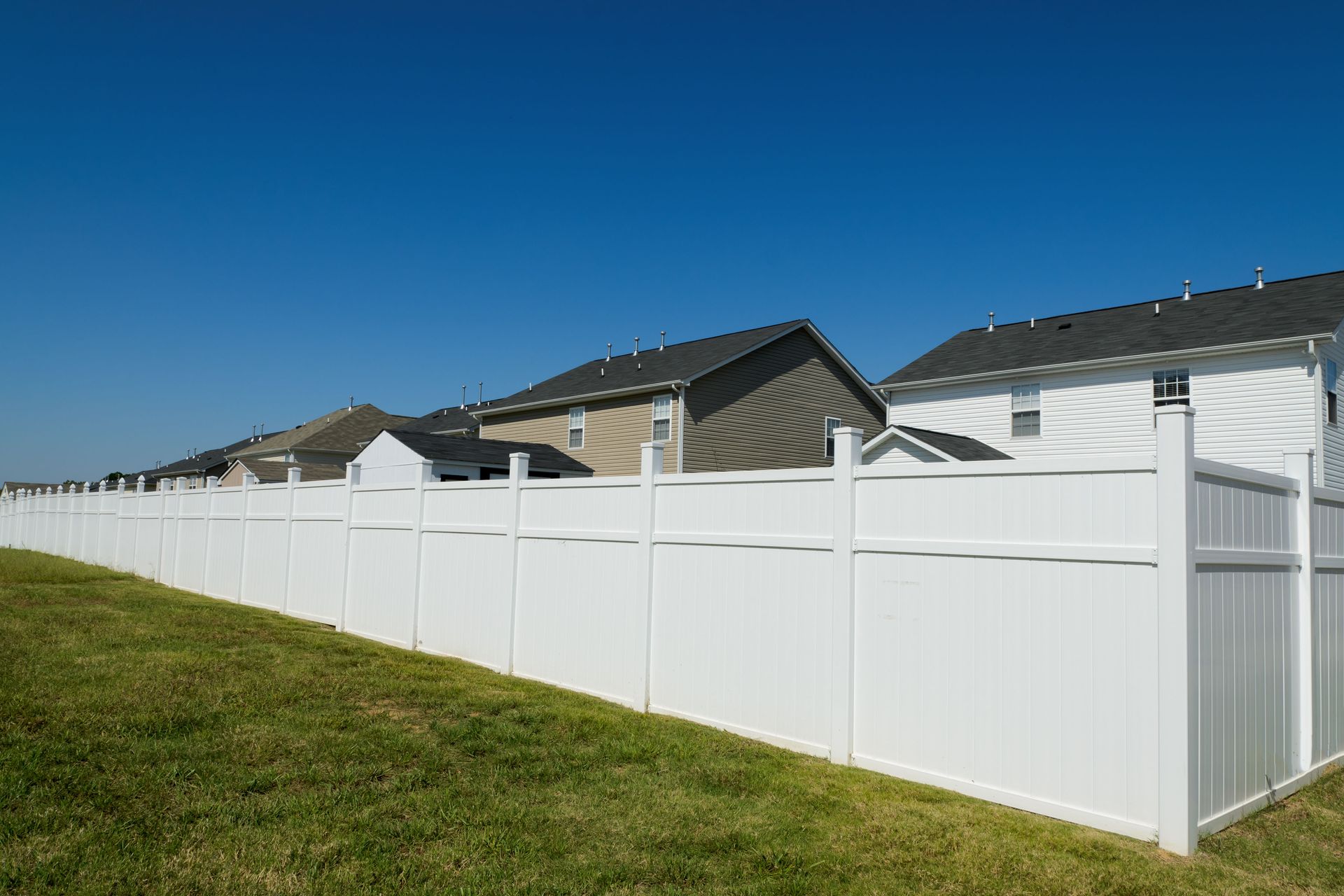
Longevity expectations should also guide your selection. According to Bob Vila, chain-link fences typically last 20 years. While utilitarian options like chain-link or vinyl have practical applications, estates with complex grade transitions often demand materials with superior structural integrity and minimal thermal deformation. Evaluating material longevity against the demands of rolling topography ensures that your fence installations remain sturdy and attractive over decades of exposure.
Evaluating Structural Metal and Ornamental Ironwork
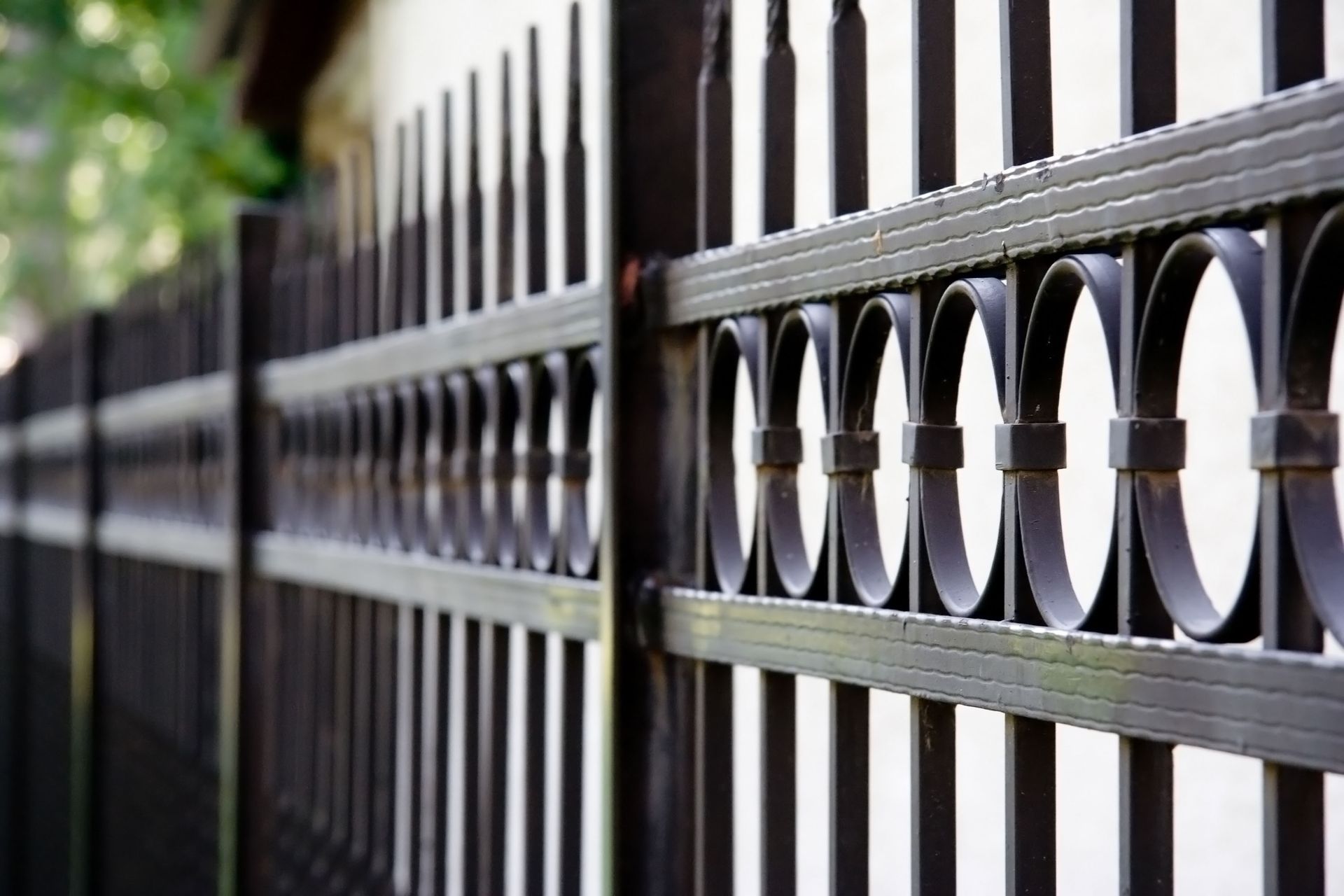
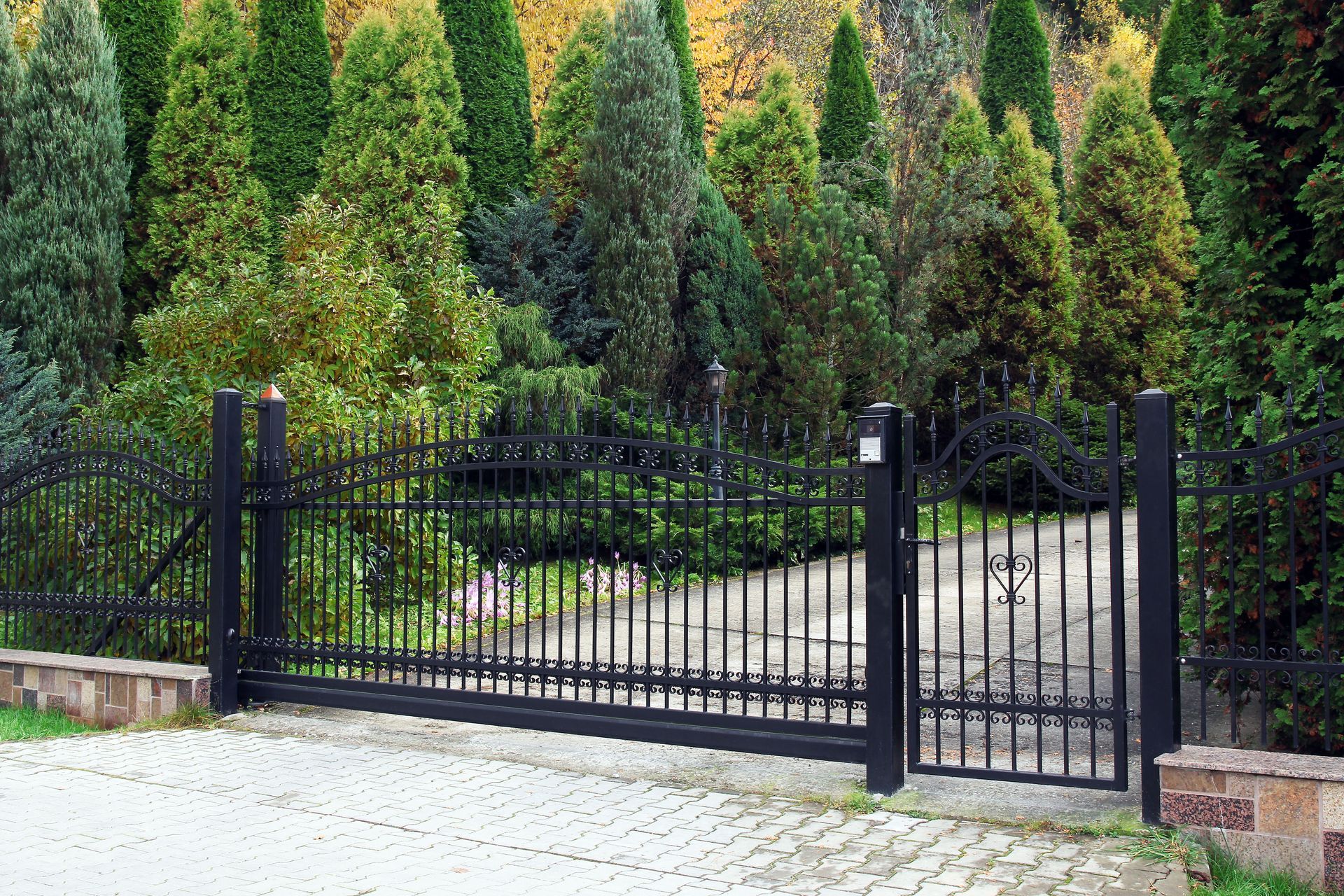
For premium durability and refined visual elegance, metallic fencing options consistently outperform organic materials on irregular grades. Lightweight aluminum provides exceptional corrosion resistance, making it suitable for damp hillsides and properties near water. However, solid forged iron and heavy-gauge structural steel represent the absolute pinnacle of strength and perimeter security for hillside estates.
Heavy metal systems resist high-velocity wind loads and physical impacts that easily warp lighter materials on exposed hills. Furthermore, custom iron fabrication accommodates exact grade transitions without leaving unsightly gaps beneath pickets. Advanced powder coatings protect ironwork from ground moisture, preventing oxidation along subterranean anchors. When tailored to the specific topography of your property, custom iron delivers an unbeatable combination of generational longevity, unyielding security, and elevated architectural appeal.
Executing Stepped and Racked Assembly Methods
Navigating slopes requires choosing between two primary construction techniques: stepping and racking. The stepped installation method treats each section as an individual stair step, keeping all rails completely horizontal while posts increase in height down the slope. This technique accommodates steep drop-offs cleanly and pairs exceptionally well with rigid pre-fabricated panels or masonry pillars. However, stepped builds leave triangular gaps beneath each section, which often require supplemental landscaping or custom bottom rails to enclose completely.
In contrast, the racked method angles horizontal rails to closely follow the natural contour of the land, maintaining a uniform, minimal gap along the ground. Racking delivers a flowing, cohesive visual line across rolling hills, preventing pets or wildlife from squeezing underneath. Custom-engineered fence installations often blend both methods, applying racked panels along gentle grades and stepping sections down dramatic declines to optimize both functionality and beauty.
Preserving Subterranean Roots and Existing Trees
Mature trees and extensive shrubbery frequently populate hilly landscapes, adding natural beauty while roots reinforce soil cohesion. However, extensive underground root networks pose formidable obstacles during post excavation. Severing major structural roots destabilizes mature trees, rendering them hazardous in high winds and potentially killing valuable landscape assets.
Responsible construction requires non-destructive installation techniques around established trees. Utilizing specialized hand augers, shifting post spacing incrementally, or employing cantilevered framing allows posts to bypass lateral roots cleanly. Root barriers can also direct future growth away from concrete footings. Respecting existing flora preserves landscape balance and leverages natural root systems to enhance bank stability along challenging perimeter lines.
Harmonizing Visual Privacy and Property Architecture
Achieving adequate visual seclusion on uneven ground requires careful sightline analysis. Because slopes alter lines of sight from neighboring properties, standard six-foot vertical panels may fail to block views from elevated perspectives uphill. Homeowners must calculate sightlines from various vantage points across the yard and neighboring structures to determine optimal panel heights.
Integrating decorative trellises, privacy louvers, and stepped estate walls allows you to establish continuous privacy without creating an overwhelming aesthetic. Flawless execution demands high precision, specialized welding, and deep geotechnical understanding to conquer rugged grades. When you need masterfully engineered, custom-crafted fence installations designed to endure challenging topography, contact Linmoore Fencing & Iron Works, Inc to schedule your consultation and bring your architectural vision to life.